





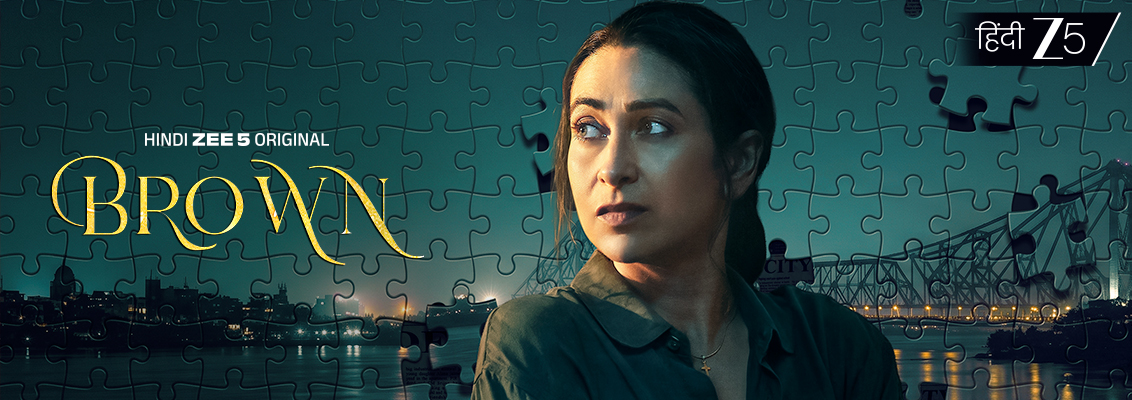
Every compelling crime story begins with a mystery. The best ones begin with characters as complicated as the crimes they investigate.
That is precisely what makes Brown one of the most intriguing series on ZEE5. Led by Karisma Kapoor as Rita Brown, the story combines murder investigations, emotional trauma, hidden secrets, and morally complex characters to create a gripping viewing experience. But what makes the series even more compelling is the fact that it is based on City of Death, the acclaimed novel by Abheek Barua.
Naturally, one question comes to mind while watching the series: how closely does Brown follow the book?
While the series draws on City of Death, it does much more than simply recreate the novel chapter by chapter. Instead, it takes the book’s emotional complexity, psychological depth, and dark atmosphere and adapts them into a visual narrative designed for modern audiences.
For viewers who enjoy a compelling psychological crime thriller, understanding the connection between Brown and City of Death makes the story even more fascinating.
Why City of Death Became the Perfect Source Material for Brown
Not every crime novel can become an effective screen adaptation. City of Death stands out as particularly suitable because it focuses on psychology as much as on mystery. The novel does not rely only on shocking twists or dramatic revelations. Instead, it explores damaged characters, emotional trauma, moral ambiguity, and the psychological consequences of crime.
Those same qualities form the foundation of Brown.
The series is not interested in presenting a straightforward investigation alone. It also explores the emotional cost of pursuing the truth and the effect crime has on the people forced to confront it. This deeper character focus is one of the reasons the transition from page to screen feels so natural.
Rather than adapting a conventional murder mystery, Brown inherits the emotional and psychological layers that make City of Death such a compelling read.
Spoiler Alert: The most dangerous secrets in Brown may not belong to the killer. They may belong to the people searching for the truth.
How Rita Brown Becomes the Emotional Centre of the Psychological Crime Thriller
One of Brown’s greatest strengths is its focus on Rita Brown herself.
While many crime stories primarily revolve around victims and suspects, this series places significant emphasis on the investigator. Rita Brown is emotionally fractured, burdened by trauma, and constantly forced to confront personal demons while investigating disturbing crimes.
That emotional depth mirrors one of City of Death’s strongest aspects.
The story is not simply about solving a case. It is about understanding how crime affects everyone it touches. Rita Brown’s internal struggles become just as important as the mystery unfolding around her.
This emphasis on character psychology helps distinguish Brown from more conventional thriller series and reinforces its identity as a true psychological crime thriller.
Every clue takes Rita Brown closer to the case. Every answer seems to pull her deeper into herself.
Why Brown Feels More Character-Driven Than a Traditional Book Adaptation
Many adaptations focus heavily on recreating plot points from the source material.
Brown takes a slightly different approach.
Instead of focusing only on events, the series expands the emotional journeys of its characters. Relationships feel layered, conversations carry hidden tension, and every interaction contributes to a growing sense of unease.
This approach allows adaptation to capture the atmosphere of the City of Death rather than simply reproduce its storyline.
For viewers unfamiliar with the novel, Brown works as a complete story on its own. For readers of the book, it offers a fresh interpretation that explores the characters’ emotional world in greater depth.
That balance is often what separates memorable adaptations from forgettable ones.
Sometimes the best adaptations do not copy every page. They capture the feeling readers remember long after the final chapter.
How Brown Brings the Dark World of City of Death to Life
Books create atmosphere through words. Television creates atmosphere through performances, visuals, and storytelling.
One of the most striking aspects of Brown is the world it creates.
The series immerses viewers in a world of uncertainty, emotional isolation, and psychological tension. Every location feels connected to the mystery. Every character appears to be carrying secrets. Every conversation seems to reveal only part of the truth.
These elements help translate the emotional darkness of City of Death into a visual experience.
Instead of relying on lengthy explanations, Brown allows viewers to experience the emotional weight of the story through its environment, characters, and relationships.
This visual storytelling plays a crucial role in helping the adaptation maintain the spirit of the original novel.
In Brown, the city feels like more than a setting. It feels like another character hiding secrets of its own.
Why Brown Introduces a New Audience to City of Death
One of the most exciting things about adaptations is their ability to introduce new audiences to the original source material.
Many viewers discovering Brown may not have been familiar with City of Death before watching the series. The adaptation provides an opportunity to explore the story’s literary roots while experiencing a fresh interpretation on screen.
At the same time, readers of the novel can revisit familiar themes through a different creative lens. That shared experience often creates the most engaging conversations around adaptations. Readers compare details, viewers discover new layers, and both groups invest themselves in the same mystery from different perspectives.
Brown successfully bridges literature and screen storytelling. The mystery unfolds on ZEE5, but its roots run much deeper than many viewers realise.
Why Brown and City of Death Share the Same Psychological DNA
At their core, both Brown and City of Death ask the same question: what happens when people are forced to confront the darkest parts of themselves?
The crime matters. The investigation matters. But the emotional and psychological consequences matter even more.
That focus on trauma, guilt, obsession, emotional conflict, and human behaviour is what connects the series and the novel so strongly. It is also what makes Brown feel different from traditional detective stories.
Rather than offering simple answers, the story explores uncomfortable truths about its characters and their choices.
That commitment to psychological storytelling is exactly what makes Brown such a compelling psychological crime thriller and one of the most striking adaptations currently streaming on ZEE5.
Some mysteries reveal who committed the crime. Brown shows how everyone involved is changed by it.
FAQs
Is Brown a web series based on the book City of Death?
Yes, Brown is adapted from Abheek Barua’s novel City of Death. The series takes inspiration from the book’s mystery, psychological themes, and emotionally complex characters.
How closely does Brown follow City of Death?
The series retains the novel’s emotional depth and psychological themes while adapting the story for a visual medium. It focuses heavily on atmosphere, character psychology, and suspense.
Why is Brown called a psychological crime thriller?
The story goes beyond a simple murder investigation and explores trauma, emotional conflict, guilt, obsession, and psychological tension. The characters’ internal struggles are just as important as the mystery itself.
Who plays Rita Brown in the adaptation?
Karisma Kapoor plays Rita Brown in the ZEE5 series. Her emotionally layered performance is one of the defining aspects of the show.
Where can I watch the Brown Web Series online?
Brown is available exclusively on ZEE5. Viewers can stream the series through the ZEE5 app and website and experience the adaptation of City of Death firsthand.